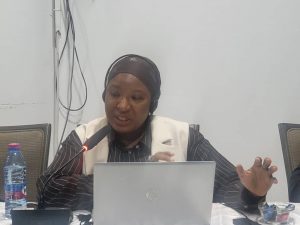



The ECOWAS Regional Competition Authority (ERCA) has successfully concluded a six-day preparatory technical workshop aimed at designing, harmonising, and validating standardised competition law training curricula for judges and judicial officers across West Africa.
Held in Accra, Ghana, from 16 to 21 November 2026 under the European Union-funded Competition and Consumer Protection Support Programme (PaCosPRo), the hybrid workshop convened legal enforcement officers from ERCA, representatives of the West African Economic and Monetary Union (WAEMU/UEMOA), judicial officers, and international competition experts.
During the deliberations, experts harmonised diverse legal and economic frameworks into a unified four-module curriculum tailored for practical three-day judicial training formats. The first module, on legal and institutional frameworks, establishes foundational principles, statutory texts, and regional enforcement mandates. The second, on the economic analysis of competition, equips generalist judges to evaluate market definitions, market power, and complex economic evidence. The third, on investigation procedures, aligns evidentiary standards, due process, and procedural guarantees between competition investigators and the bench. The fourth, on sanctions and remedies, provides clear criteria for proportional fines, behavioural commitments, and victim compensation.
The curriculum bridges civil and commercial legal principles with economic public policy. It explicitly distinguishes traditional unfair competition from anti-competitive practices, integrates comparative jurisprudence, and establishes a flexible, tiered approach to accommodate varying levels of regulatory maturity across Member States.
To support the upcoming capacity-building roll-out, participants adopted four strategic recommendations. The roll-out includes 15 national training workshops for judicial actors, 15 national workshops for competition investigators, and two specialised regional sessions for magistrates, primarily scheduled for 2027.
Participants first called for early planning and calendar predictability, with a detailed annual schedule of the planned 2027 workshops developed and shared well in advance so that trainers and stakeholders can prepare effectively. They also recommended timely stakeholder notification, giving all participating institutions, judicial actors, and co-trainers adequate advance notice to ensure strong attendance and seamless regional coordination.
They further recommended adopting a hybrid training modality, combining in-person and virtual participation, to broaden access for judicial actors across all Member States. Finally, they called for the development and dissemination of training materials, namely standardised practical guides and reference booklets based on the validated modules, to ensure long-term sustainability across Member States.
ERCA’s active participation in developing this cohesive training foundation for 2027 reinforces its core mandate under Article 3 of the ECOWAS Revised Treaty and Supplementary Act A/SA.2/12/08. That mandate is to promote fair competition, regional economic integration, trade liberalisation, investment promotion, and robust consumer protection across the West African common market.